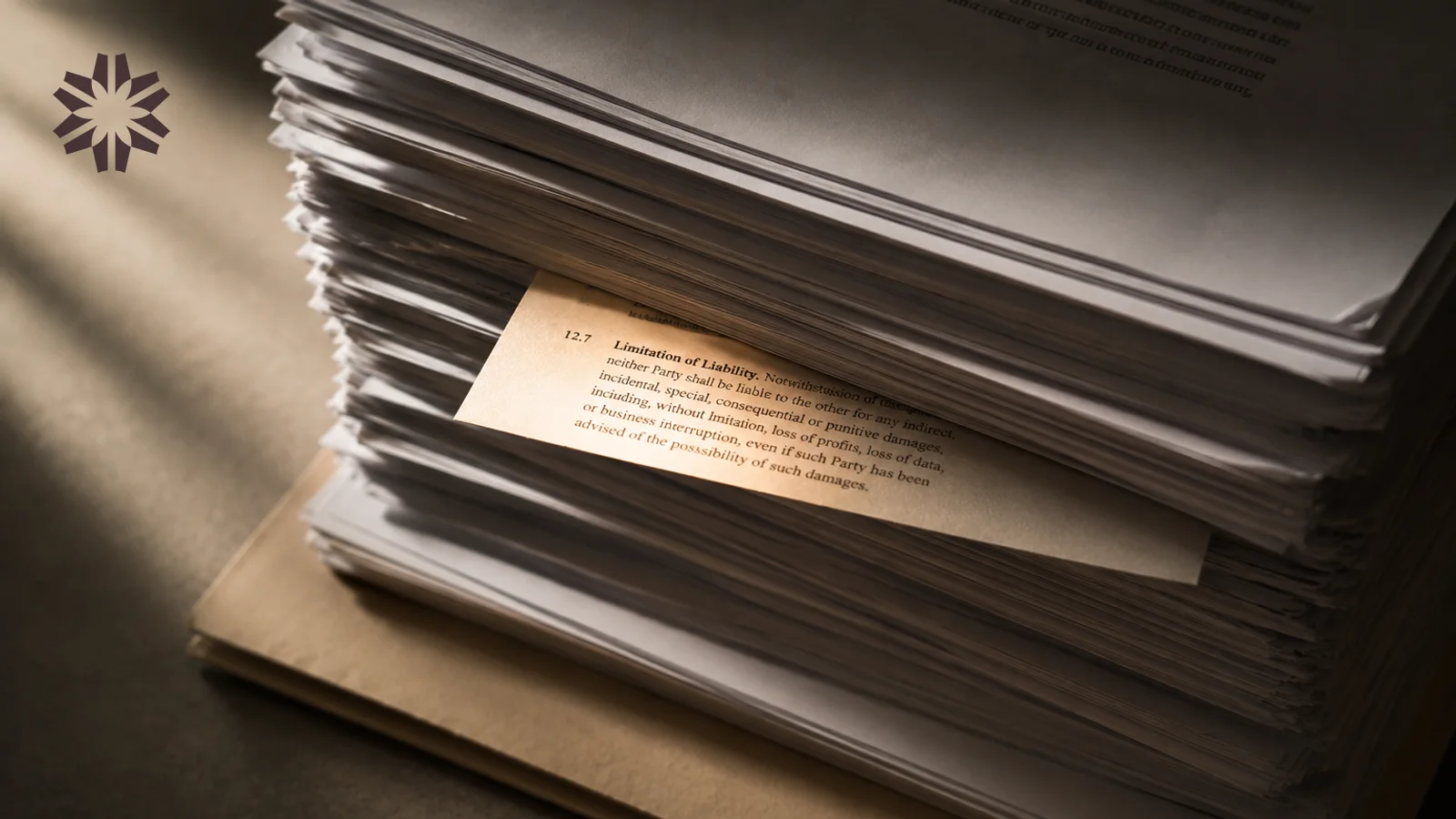
Legal work doesn’t degrade because lawyers are bad. It degrades because context doesn’t survive transitions.
Every handoff is a knowledge leak, and most systems are designed to let it happen.
Every case starts with context. What happened. Who’s involved. What matters. What doesn’t. What’s already been said. What can’t be said again.
That context is built slowly, over hours of reading, connecting facts, forming a theory of the case.
And then the case changes hands.
The work doesn’t transfer. The file does.
Every handoff is a reset
A new attorney opens the file. The documents are there. The pleadings are there. The notes might even be there.
But the context isn’t. Not fully. Not reliably. Not in a way that carries forward.
So the work starts again.
Legal systems are built around files. Legal work is built around understanding. And understanding doesn’t survive a handoff.
Why was this argument made? What facts were considered irrelevant? What changed between versions? What risk was identified but never written down?
That context lives in the lawyer’s head. When the lawyer leaves, transfers, or hands off the case, it leaves with them.
The problem isn’t rare. It’s structural.
In many environments, handoffs aren’t the exception. They’re the norm. High turnover. Large caseloads. Team-based workflows. Multi-jurisdiction coordination.
Especially in government practice, where cases regularly move between attorneys, units, or offices.
Every transition introduces risk. Not because someone made a mistake. Because the system was never designed to carry context forward.
So the lawyer compensates
The new attorney does what every attorney does. They reconstruct the case: re-read the record, rebuild the timeline, re-evaluate the facts, re-derive the strategy.
Not because they want to. Because they have to.
When the system can’t carry context, the lawyer has to.
The cost isn’t just time
This isn’t just inefficiency. It’s exposure, inconsistent filings, missed facts, and decisions made without full context.
That’s how positions get taken that don’t hold up later.
And once those decisions are made, they’re hard to unwind.
Sometimes the first time a contradiction is discovered is in court. Not because the information wasn’t there. Because it didn’t survive the handoff.
The illusion of documentation
Most systems assume that documentation solves this.
It doesn’t.
You can write notes, summarize files, leave comments. But none of that recreates the working understanding of a case.
Documentation captures outputs. It rarely captures reasoning.
Most legal AI tools don’t solve this either. They generate outputs on demand, but they don’t preserve the context those outputs depend on.
Legal work requires continuity
The same facts have to appear in pleadings, align in motions, hold up in deposition, and withstand cross-examination. That only works if the underlying context stays intact.
Not just the documents. The structure. The relationships. The reasoning.
Most systems store files. They don’t carry context. They don’t preserve how the case was understood. So every new attorney inherits the file, but not the work that made it usable.
So the system stays simple, and the lawyer absorbs the complexity.
Where Irys One fits
Irys One isn’t a place to store documents. It’s a system that carries the matter.
The record is ingested once. Documents, messages, and records are converted by Irys One’s proprietary OCR into structured, connected data tied back to source. Outputs are tied to and traceable back to the underlying record. Nothing floats free from the file.
The system builds a matter-level knowledge graph: parties, timelines, obligations, authorities, and key facts extracted and linked across every document in the matter. That structure persists. It doesn’t live in any one attorney’s head. It doesn’t disappear when the case changes hands.
The system doesn’t rely on re-sending context, rebuilding prompts, or re-uploading documents. The record is already structured, connected, and available at the matter level.
The handoff doesn’t have to be a reset
When the system carries the record, a new attorney doesn’t start from scratch. The timeline doesn’t have to be rebuilt. Prior reasoning doesn’t disappear. The structure of the case remains intact.
The work compounds. It doesn’t degrade.
The real problem
Legal work doesn’t break because of complexity. It breaks because continuity is lost.
And every time a case changes hands, the system asks the lawyer to rebuild what should have been preserved.
The question isn’t how to document the case better. It’s how to make sure the case doesn’t have to be rebuilt at all.
Because when context survives, everything else holds: the argument, the strategy, the outcome.